Abstract
Background
The biological-therapeutic activity of medical cannabis is based on a wide range of secondary metabolites, including terpenes and the cannabis-specific cannabinoids, which are produced to the highest concentrations in the plants’ unfertilized inflorescences. Recent evidence demonstrate effects of exogenous factors on cannabinoid and terpene profiles in cannabis, with substantial impact to the macronutrients N,P,K. However, knowledge on effects of most other essential mineral-nutrients, including magnesium (Mg), is lacking. Mg-availability is of potential relevance for the pharmaceutical-profile of cannabis, as it is required for activity of key enzymes in the biosynthesis pathway of cannabinoids and terpenes, and for the formation of Geranyl-diphosphate (GPP) that involves in the biosynthesis of both specialized secondary-metabolite groups. The present study thus evaluated the hypothesis that Mg-supply affects cannabinoid and terpene biosynthesis in cannabis, in addition to its effect on plant-function, and in relation to induced-changes to the plant-organs ionome.
Methods
To test the hypothesis, cannabis plants were grown under five Mg levels ranging 2–140 mg L−1 (ppm), and morpho-physiology analyses, cannabinoid and terpene profiles of inflorescences from two developmental-orders, and ionome-profiling of the plant-organs were conducted. The wide concentration rage studied was aimed to pinpoint the optimal supply concentrations for plant morpho-physiology and secondary-metabolite production, and the deficiency and toxicity concentration thresholds for the reproductive stage.
Results
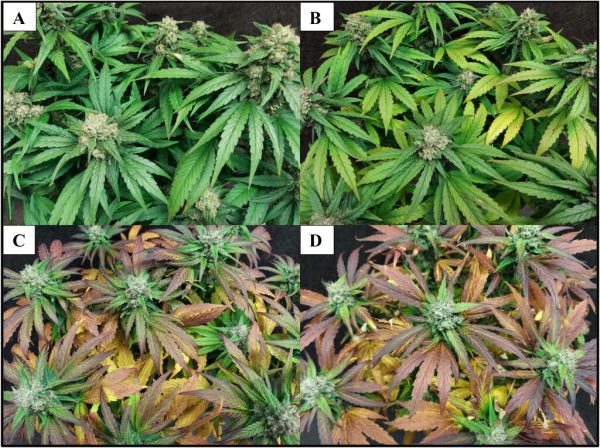
The results revealed high sensitivity of cannabinoid and terpene biosynthesis to Mg, thus supporting the hypothesis. Morpho-physiological function, and concentrations of the specialized metabolites were restricted by low Mg-availability of 2–20 mg L−1, and were optimal under the supply treatment of 35 mg L−1 Mg. While under over-supply levels of 70–140 mg L−1 Mg, which impacted physiological-function and reduced reproductive biomass by 12.5%, secondary-metabolism remained unharmed.
Conclusions
Taken together, the results reveal that 35 mg L−1 Mg is within the optimal range for excelled yield quantity as well as quality, i.e., high secondary metabolite production, with suppression of cannabinoid and terpene production under lower or higher Mg supply.