
What is VPD and why is it so important?

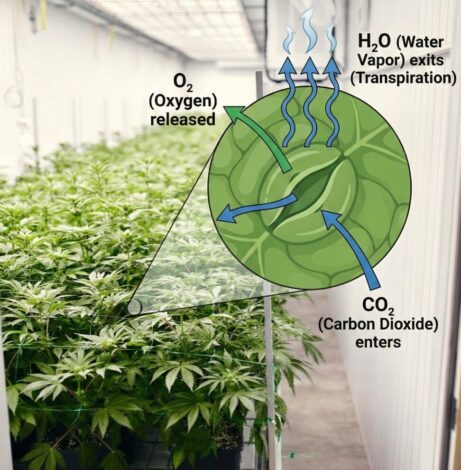
VPD (Vapor Pressure Deficit) is the difference between the maximum amount of water vapour that air can hold at a given temperature (saturation pressure) and the actual amount of water vapour in the air. In practice, low VPD means very humid, ‘low-absorbent’ air, while high VPD means dry air that ‘draws’ water from the leaves. It is not relative humidity (RH) itself, but VPD that determines how intensively a plant absorbs water and then releases it into the environment.

Under controlled conditions (lighting, CO2, fertigation, HVACD), it is VPD that binds the entire physiological system of the plant together.

Transpiration (transport of water and nutrients) creates negative pressure in the xylem, which transports water from the roots, transfers macro- and microelements, and enables leaf cooling.

Science-backed technology

“Cultivation under high RH resulted in a reduced vapor pressure deficit (VPD) ranging from 0.62 kPa to 0.25 kPa during flowering, indicating values outside the optimal range for cannabis cultivation. This environment led to significant reductions in total biomass (-75.3%), flower biomass (-71.0%), trunk diameter (-0.4%), and node count (29.3%), compared to low RH conditions. Conversely, stem length increased by 9.7%, and apical internodal spacing expanded by 0.04% under high RH. Flowering was delayed by three weeks with high RH, accompanied by notable reductions in both vegetative growth and inflorescence production. Furthermore, high RH significantly suppressed cannabinoid accumulation.”

Source: Frontiers in Plant Science

“Results indicated significantly enhanced plant height and dry weight on the central shelves, attributed to optimal VPD control. Growth analysis also revealed higher relative growth rates (RGR) under tightly managed VPD conditions on the central shelves, even amidst varying environmental parameters. Most notably, effective VPD control translated these growth metrics into increased yields. For instance, a 71 % and 66 % increase in final plant dry weight over the lower and upper shelves was noted. These advances were mirrored in the plant height, which also saw 57 % and 103 % growth. Overall, the findings underscore the critical role of VPD control in plant growth and yield enhancement within structured environments.”

Source: Scientia Horticulturae

Data sheet

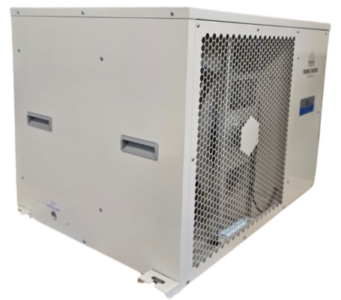
Discover the technical specifications of  Prime Dry Pro.

Contact us

Would you like to learn more about the product, its installation, use or availability? Please use the contact form.